
For many frequent flyers, earning airline points is only half the story. The real long-term value often comes from airline status — a structured loyalty tier system that rewards frequent travellers with progressively better benefits the more they fly. In Australia, the two dominant frequent flyer ecosystems, Qantas Frequent Flyer and Velocity Frequent Flyer, both use tiered status programs designed to recognise and reward customer loyalty beyond just points accumulation. Understanding how airline status levels work, how they are earned, and what benefits they unlock is essential for anyone looking to maximise their travel experience.
At its core, airline status is a recognition of your flying activity over a fixed membership year. Unlike points, which can be earned through credit cards, shopping portals, and partners, status is primarily earned through flying — specifically through Status Credits. The more you fly, and the more premium your tickets, the more Status Credits you earn, which then determine your tier within the airline’s loyalty program.
What Are Airline Status Levels?
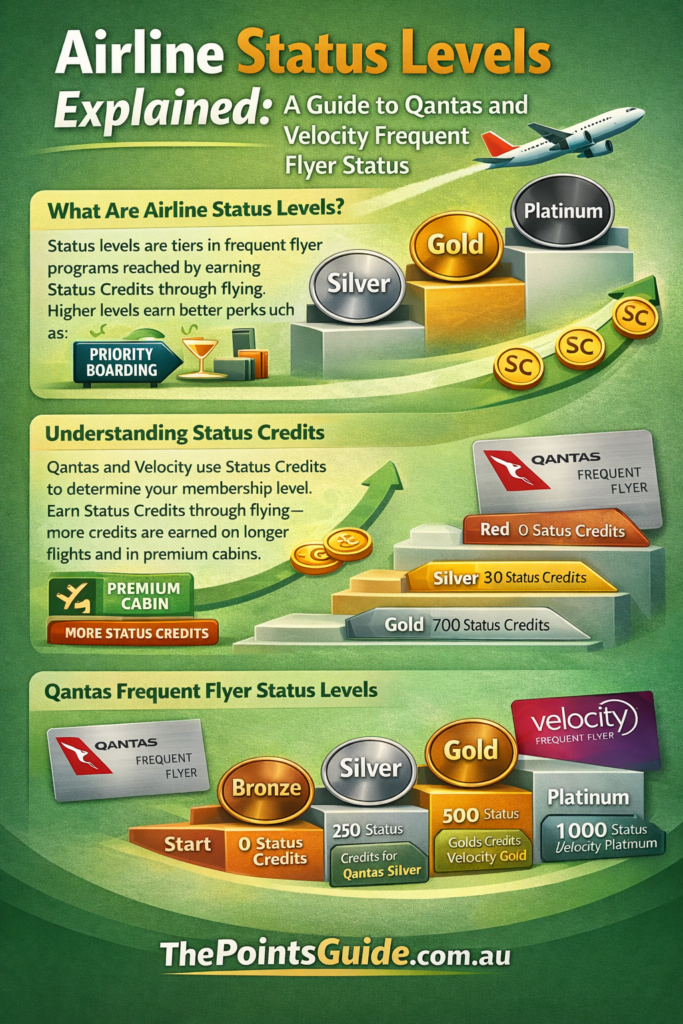
Airline status levels are structured tiers within a frequent flyer program that provide increasing benefits as members fly more frequently or spend more with the airline. These benefits can include priority check-in, lounge access, extra baggage allowances, seat selection privileges, bonus points earning, and priority customer service. Status is not permanent — it must be earned and maintained each year by meeting specific flying thresholds.
In Australia, airline status is particularly valuable due to long domestic distances, limited airline competition on some routes, and the strong partnership networks both Qantas and Virgin Australia maintain. Even entry-level status can significantly improve the travel experience, especially for domestic business travellers and frequent leisure flyers.
How Status Is Earned: The Role of Status Credits
Both Qantas Frequent Flyer and Velocity Frequent Flyer rely on Status Credits, not points, to determine status levels. Status Credits are earned when you fly on eligible flights and are calculated based on three key factors: the distance flown, the airline you fly with, and the fare class purchased. Premium cabins and flexible fares earn significantly more Status Credits than discount economy tickets.
Importantly, Status Credits reset at the end of each membership year, while your status is reassessed. If you do not earn enough Status Credits to retain your tier, you may drop down a level or two. This system encourages consistent flying and ongoing loyalty rather than one-off travel bursts.
Qantas Frequent Flyer Status Levels Explained
Qantas Frequent Flyer has four published status tiers, each offering progressively more valuable benefits. These tiers are deeply integrated across the oneworld alliance, making Qantas status particularly powerful for international travellers.
Qantas Bronze Status
Bronze is the entry level for all Qantas Frequent Flyer members and does not require any flying activity to maintain. While Bronze offers limited benefits, members still earn points and Status Credits on eligible flights. For occasional travellers, Bronze is essentially a points-earning membership without meaningful travel perks.
Qantas Silver Status
Silver status is the first meaningful tier and is achieved by earning 300 Status Credits within a membership year. Silver members receive priority check-in, preferred seating, a modest points bonus on flights, and access to Qantas Club lounges when flying domestically with Qantas. While lounge access is limited compared to higher tiers, Silver status marks the transition from casual flyer to recognised customer.
Qantas Gold Status
Gold status is where Qantas Frequent Flyer becomes genuinely valuable. Requiring 700 Status Credits per year, Gold delivers extensive benefits including full Qantas and oneworld Sapphire lounge access, priority boarding, additional baggage allowance, fast-track security at select airports, and a generous points earning bonus. For Australian frequent flyers, Qantas Gold is often considered the “sweet spot” where benefits meaningfully outweigh the effort required to earn status.
Qantas Platinum and Platinum One
Qantas Platinum requires 1,400 Status Credits, while the invitation-only Platinum One tier demands even higher flying thresholds. Platinum members receive oneworld Emerald status, unlocking first-class lounges worldwide, the highest boarding priority, premium phone support, and increased upgrade priority. Platinum One adds personalised service and dedicated account management, targeting Australia’s most frequent and high-spending travellers.
| Benefit | Bronze | Silver | Gold | Platinum |
|---|---|---|---|---|
| Status Credits Required (per year) | 0 | 300 | 700 | 1,400 |
| Points Earn Bonus on Qantas Flights | None | 50% | 75% | 100% |
| Qantas Club / Lounge Access | ❌ | ✔ (Qantas Club when flying Qantas) | ✔ (Qantas & oneworld Sapphire lounges) | ✔ (First Class, Qantas & oneworld Emerald lounges) |
| Priority Check-in | ❌ | ✔ | ✔ | ✔ |
| Priority Boarding | ❌ | ❌ | ✔ | ✔ |
| Priority Baggage Handling | ❌ | ❌ | ✔ | ✔ |
| Extra Checked Baggage Allowance | ❌ | ❌ | ✔ | ✔ (higher allowance) |
| Preferred Seating | ❌ | ✔ | ✔ | ✔ |
| Complimentary Seat Selection (selected seats) | ❌ | ❌ | ✔ | ✔ |
| Upgrade Priority | Lowest | Low | High | Highest |
| Dedicated Premium Support Line | ❌ | ❌ | ✔ | ✔ (priority servicing) |
| oneworld Alliance Tier | None | Ruby | Sapphire | Emerald |
| International Partner Lounge Access | ❌ | Limited | ✔ | ✔ (First Class lounges) |
| Waitlist Priority | ❌ | ❌ | ✔ | ✔ |
| Higher Upgrade Success Rate | ❌ | ❌ | ✔ | ✔ |
Velocity Frequent Flyer Status Levels Explained
Velocity Frequent Flyer operates a similar tiered system, aligned with Virgin Australia and its partner airlines. While Velocity’s global alliance reach is smaller than Qantas’, its status benefits are particularly strong for domestic travel and Virgin Australia flyers.
Velocity Red Status
Red is the base tier and requires no flying activity to maintain. Red members earn points and Status Credits but receive minimal travel benefits. Like Qantas Bronze, it serves primarily as a points-earning platform.
Velocity Silver Status
Silver status is achieved with 250 Status Credits and introduces benefits such as priority check-in, priority boarding, bonus points earning, and limited lounge access when flying Virgin Australia. Silver is particularly attractive for travellers who fly domestically several times per year but do not reach higher tiers.
Velocity Gold Status
Gold status, requiring 500 Status Credits, is Velocity’s most popular tier among frequent travellers. Gold members receive Virgin Australia lounge access, priority boarding and baggage handling, additional baggage allowances, and partner lounge access on international flights. Velocity Gold also provides strong reciprocal benefits with selected partner airlines, making it highly competitive with Qantas Gold for domestic travellers.
Velocity Platinum Status
Platinum is Velocity’s top published tier and requires 1,000 Status Credits annually. Platinum members enjoy the highest priority for upgrades, dedicated support channels, maximum points bonuses, and enhanced lounge access. While Velocity Platinum lacks a true equivalent to Qantas Platinum One, it remains extremely valuable for loyal Virgin Australia flyers.
| Benefit | Red | Silver | Gold | Platinum |
|---|---|---|---|---|
| Status Credits Required (per year) | 0 | 250 | 500 | 1,000 |
| Points Earn Bonus on Virgin Australia Flights | None | 50% | 75% | 100% |
| Virgin Australia Lounge Access | ❌ | Limited (selected domestic lounges) | ✔ | ✔ |
| Partner Airline Lounge Access | ❌ | ❌ | ✔ (eligible partners) | ✔ (broader access) |
| Priority Check-in | ❌ | ✔ | ✔ | ✔ |
| Priority Boarding | ❌ | ✔ | ✔ | ✔ |
| Priority Baggage Handling | ❌ | ❌ | ✔ | ✔ |
| Extra Checked Baggage Allowance | ❌ | ❌ | ✔ | ✔ (higher allowance) |
| Complimentary Preferred Seating | ❌ | ❌ | ✔ | ✔ |
| Upgrade Priority (Points Upgrades) | Lowest | Low | High | Highest |
| Complimentary Seat Selection | ❌ | ❌ | ✔ | ✔ |
| Dedicated Premium Support Line | ❌ | ❌ | ✔ | ✔ (priority servicing) |
| Family Pooling of Status Credits | ❌ | ❌ | ✔ | ✔ |
| International Partner Status Recognition | ❌ | ❌ | ✔ | ✔ |
| Waitlist & Irregular Operations Priority | ❌ | ❌ | ✔ | ✔ |
| Increased Upgrade Clearance Rates | ❌ | ❌ | ✔ | ✔ |
Key Differences Between Qantas and Velocity Status Ecosystems
While both programs reward loyalty through flying, there are strategic differences in how their ecosystems operate. Qantas status tends to favour international travellers due to its strong oneworld integration, while Velocity status excels for domestic flying and simpler qualification thresholds. Velocity Gold is generally easier to achieve than Qantas Gold, while Qantas Platinum offers more extensive global premium benefits.
Another key difference lies in partner recognition. Qantas status benefits extend seamlessly across oneworld airlines, whereas Velocity’s benefits vary depending on specific bilateral airline partnerships. For travellers who frequently fly internationally beyond Australia and Asia-Pacific, Qantas status often delivers greater long-term value.
Is Airline Status Worth Chasing?
Airline status is not for everyone, but for frequent travellers it can significantly enhance comfort, efficiency, and overall travel value. Lounge access alone can justify the effort for many flyers, while priority services and upgrade opportunities provide tangible time and comfort savings. The key is aligning your flying behaviour with the right program rather than spreading flights across multiple airlines.
From an Australian Points Strategist perspective, the smartest approach is to choose one primary airline ecosystem, understand its Status Credit earning structure, and plan flights intentionally. When used strategically, airline status transforms frequent flying from a necessity into a far more rewarding experience.